Your California Real Estate Resource | CaliLove

A backyard home can add space for family, guests, or a renter. In California, the right option depends on state law and rules for the property. An accessory dwelling unit (ADU) differs from a junior accessory dwelling unit (JADU), affecting location, size, rental use, and approvals.
This guide covers California ADU rules for 2026, including changes effective January 1. The state’s Department of Housing and Community Development updated its ADU Handbook in March 2026. Start there, then confirm requirements with your city or county before committing to plans or construction.
ADU or JADU, what is the difference?
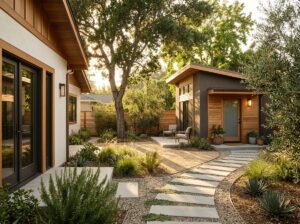
An ADU is a separate dwelling on the same lot as a primary home. It has independent living facilities for sleeping, eating, cooking, and sanitation. It may be a detached backyard cottage, an addition attached to the home, or a conversion of existing space such as a garage.
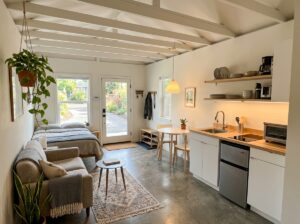
A JADU is smaller and must be created entirely within the walls of a proposed or existing single-family residence. California law limits it to 500 square feet of interior livable space. It may have a separate bathroom or share sanitation facilities with the main home. A JADU also needs a separate entrance and an efficiency kitchen. State law generally allows one JADU on a qualifying single-family lot, not in a detached backyard shed.
Choose the type that fits your property
A detached ADU can offer more privacy, but may require new foundations, utility runs, and access work. Converting a garage uses an existing structure, though it may need upgrades to meet current safety standards. A JADU uses space within the primary home and can suit a smaller project. Consider the lot, building condition, utility access, budget, and intended use before choosing.
What changed for California owners in 2026?
AB 1154 changed JADU rules starting January 1, 2026. If a JADU shares sanitation facilities with the existing home, the local ordinance must require owner occupancy in the single-family residence. The owner may live in either the remaining home or the JADU. Owner occupancy is not required for a JADU with separate sanitation facilities, subject to the law’s exceptions.
AB 1154 also requires a JADU rental term to be longer than 30 days, so a JADU cannot be used as a short-term vacation rental under this rule. A deed restriction must be recorded, including a restriction against selling the JADU separately from the home. Read the official AB 1154 text and ask your planning department how its ordinance applies to your parcel.
SB 543 also updated California’s ADU permitting process. A permitting agency must determine whether an ADU or JADU application is complete and provide written notice within 15 business days after receiving it. If it is incomplete, the notice must identify missing items and explain how to address them. Keep copies of your application and agency correspondence.
Check local rules before you design
State law sets important standards, but your project still goes through the local permitting agency. Cities and counties may apply objective requirements for height, setbacks, lot coverage, design, and access. Rules differ by jurisdiction. Coastal, historic, fire-hazard, or HOA properties may need additional review. Verify requirements for your address instead of relying on another city’s rules.
Ask for the current application checklist
Before hiring a designer, ask whether your proposed unit qualifies as an ADU or JADU, what size and location standards apply, and which permits and plans are required. Confirm fire access, utilities, sewer or septic capacity, drainage, and any local design review. If converting a garage, ask whether its condition or status changes the requirements.
SB 543’s 15-business-day written notice requirement is for the initial completeness determination. It does not mean every project will be permitted or ready to build within 15 business days. Missing documents, plan revisions, utility work, and other approvals can extend the process. Request the checklist and agency decisions in writing so you can track what remains.
Budget for more than construction
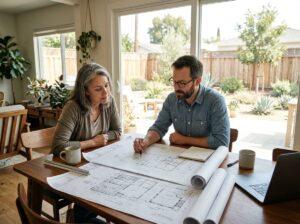
Ask for an estimate that separates design, engineering, permits, demolition, construction, utility connections, inspections, and finish work. Costs can change with soil, access, distance to utility lines, and structural upgrades. Compare multiple qualified local estimates and check what each includes. A low building quote may leave out site work or required improvements.
State law limits certain impact fees. HCD’s 2026 handbook explains that impact fees generally may not be imposed on an ADU of 750 square feet of interior livable space or less, or a JADU of 500 square feet or less. This is not a promise that a small project has no charges. Utility connection or capacity charges, permits, inspections, design, and construction may still add costs. Ask the local agency and utility providers for written fee information before finalizing a budget.
If rental income is part of the plan, estimate net income rather than relying on headline rent. Include vacancy, repairs, management, utilities, taxes, insurance, and financing. CaliLove’s guide to California rental property investing covers broader investment questions. Contact your insurer before construction to ask how an additional dwelling or rental use may affect coverage. See our California home insurance guide for related coverage issues.
A practical checklist before you start
- Set the goal. Decide whether the unit is for family, guests, or a long-term renter. This helps narrow the ADU or JADU options.
- Gather property details. Collect the address, parcel information, survey, existing plans, and known utility or access constraints.
- Check local requirements. Request the current application checklist, zoning standards, fee schedule, and completeness-review process.
- Price the project. Compare design and construction estimates with utility, permit, insurance, and ongoing operating costs.
- Keep a written record. Save agency decisions and consult qualified local professionals when specialized design, building, insurance, or legal questions arise.
Common questions about California ADUs
Can I rent a JADU for a weekend?
No. AB 1154 requires a JADU rental term to be longer than 30 days. Check local requirements too, since additional rules may apply to the property or tenancy.
Does every JADU require the owner to live on site?
No. The owner-occupancy condition applies when the JADU shares sanitation facilities with the main home, subject to state law’s exceptions. A JADU with separate sanitation facilities is not subject to that condition under AB 1154. Confirm the details with the permitting agency.
Are small ADUs free of all fees?
No. Qualifying small ADUs and JADUs are exempt from certain impact fees, but other expenses and some connection or capacity charges may remain. Ask the city, county, and utility providers to explain each charge.
Plan around the property, not just the floor plan
California’s 2026 ADU and JADU updates create useful options, but a successful project starts with the parcel and its local requirements. Confirm the unit type, verify current rules, and understand the application and cost picture before committing to construction. This article is general education, not legal, tax, or construction advice. Requirements can change, and local conditions matter. Check current state guidance and consult qualified professionals for decisions about your property.