Your California Real Estate Resource | CaliLove

California’s wildfire seasons have grown longer and more intense, and for homeowners, that reality now shows up in two places: the safety of your home and the size of your insurance bill. The good news is that the same upgrades that make your home more likely to survive a wildfire can also earn you meaningful discounts on your premium.
Under the state’s Safer from Wildfires framework, insurers are required to reward homeowners who take specific mitigation steps. Below are the most effective wildfire-resistant home upgrades, why they matter, and how they can help lower your insurance costs. If you have been following California’s home insurance crisis, these projects are one of the most powerful tools you have.
Why Wildfire-Resistant Upgrades Pay Off
Wildfires threaten homes in three ways: direct flames, radiant heat, and flying embers, which can travel a mile or more ahead of a fire. Most homes that ignite during a wildfire are actually lost to embers finding a vulnerable entry point, not a wall of flame. Hardening your home closes off those weak spots.
The payoff is twofold. First, a hardened home has a dramatically better chance of surviving a fire. Second, every qualifying action under the state’s insurance discount program can lower your premium and even improve your ability to keep or find coverage. In today’s market, that makes these upgrades some of the smartest home improvement projects you can invest in.
Top Home-Hardening Upgrades to Prioritize
Home hardening means using ignition-resistant construction and materials to help your home withstand embers and heat. CAL FIRE’s home hardening guidance breaks it down area by area, but these upgrades deliver the most protection for the investment.
Install a Class A Fire-Rated Roof
Your roof is the largest and most vulnerable surface on your home. A Class A fire-rated roof — including asphalt fiberglass composition shingles, concrete or clay tile, or metal — offers the highest level of protection. Wood shake shingles, by contrast, are not fire-rated and are among the biggest liabilities in a fire zone. If your roof is due for replacement, upgrading to Class A is one of the highest-impact moves you can make.
Add Ember-Resistant Vents
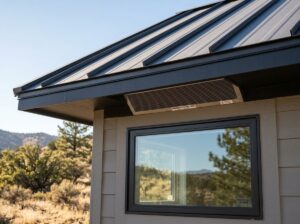
Vents are a common entry point for embers. Installing 1/16 to 1/8 inch noncombustible, corrosion-resistant metal mesh screens, or upgrading to State Fire Marshal-approved ember-resistant vents, helps keep wind-blown embers out of your attic and crawl spaces. This is often a low-cost project with an outsized safety benefit.
Upgrade to Dual-Pane Tempered Windows
Windows can crack from radiant heat even before flames arrive, opening a path for embers. Dual-pane windows with at least one layer of tempered glass are roughly four times more resistant to breaking during a wildfire. Where possible, limit the size and number of windows facing heavy vegetation.
Enclose Eaves and Use Noncombustible Siding
Open eaves can trap rising heat and embers, so boxing them in with ignition-resistant or noncombustible materials adds protection. Replacing combustible siding, especially at roof-to-wall intersections, with noncombustible materials further reduces the risk of ignition.
Create Defensible Space Around Your Home

Hardening the structure is only half the equation. The space around your home determines whether a fire can reach it in the first place.
Zone 0: The Ember-Resistant Zone
The first five feet around your home is the single most important area. This ember-resistant zone, often called Zone 0, should be kept free of combustible materials. Replace wood chips and mulch with gravel, pavers, or concrete, and swap any wood fencing that connects to the house for metal, since a wooden fence can act like a wick leading fire straight to your walls.
Zones 1 and 2: Vegetation Management
Beyond Zone 0, California law requires up to 100 feet of defensible space. Zone 1, out to 30 feet, focuses on removing dead vegetation, keeping grass short, and creating separation between plants. Zone 2, from 30 to 100 feet, reduces overall fuel so a fire loses intensity before it reaches your home. Keeping this buffer maintained is both a legal obligation and a proven lifesaver.
How These Upgrades Lower Your Insurance Costs
Since 2022, California’s Safer from Wildfires regulation has required insurers that use wildfire risk in their pricing to offer discounts for mitigation. Every qualifying action — from a Class A roof to a cleared Zone 0 — can translate into premium savings. The FAIR Plan offers discounts as well, and homes that meet stronger resilience standards can qualify for larger reductions on the wildfire portion of their premium.
To claim your savings, complete the work, then contact your insurer or broker. You may need to provide proof or pass an inspection. It is also worth asking for your home’s wildfire risk score, which insurers are now required to disclose, along with the specific actions that would lower it. New for 2026, the California Safe Homes Act (AB 888) even offers grants to help eligible homeowners pay for fire-safe roofs and Zone 0 upgrades.
Getting Started and Budgeting

You do not have to do everything at once. Start with the low-cost, high-impact steps: clear your Zone 0, install ember-resistant vent screens, clean gutters, and maintain defensible space. Save the larger investments, like a new roof or windows, for when those components are due for replacement anyway, and choose fire-rated materials at that time. Look into available grants, get quotes from licensed contractors, and keep documentation of every improvement for your insurer. A fire-ready home is also more attractive if you ever decide to sell your home, since buyers increasingly weigh insurability before making an offer.
The Bottom Line
Wildfire-resistant upgrades are one of the few investments that protect your family, your home, and your wallet all at once. By hardening your structure and maintaining defensible space, you improve your home’s odds of surviving a fire while unlocking insurance discounts that offset the cost over time. Whether you are settling into a new place or buying a home in a fire-prone area, these steps are among the smartest moves you can make in California today.